
24
Sept. 2026

24
Sept. 2026
Du 25 septembre au 1er octobre prochain, la Faculté des Sciences Sociales organise un colloque interdisciplinaire et international à Cerisy, haut lieu de la pensée francophone depuis un siècle.

25
Sept. 2026
01
Oct. 2026
25
Sept. 2026
Pour cette édition 2026, l’Université de Liège s'associe au Low-Tech Studio pour une Nuit des Chercheur·es inédite.

25
Sept. 2026
Durant cet atelier de 3h, vous serez amené es à voyager entre des moments de réflexion personnelle, des instants de partage de contenu théorique ainsi que des exercices visant à augmenter votre résilience face aux échecs. Venez reconsidérer les défaites comme étant des cadeaux vous permettant de grandir professionnellement voire, humainement. Objectifs de la formation : • Recontextualiser la notion d'échec en recherche • Nuancer ses perceptions au regard des différents types de défaites • Développer une attitude résiliente • Intégrer ces « échecs » au sein de son processus de croissance professionnelle
26
Sept. 2026
26
Sept. 2026
28
Sept. 2026
29
Sept. 2026
29
Sept. 2026
30/09/2026 - 12h50 - D251
will present
2000s: Wednesday, 30 September 2026
Marc Fleurbaey and François Maniquet
Fair income tax
In : The Review of Economic Studies, 2006, vol. 73(1), p. 55-83
30
Sept. 2026
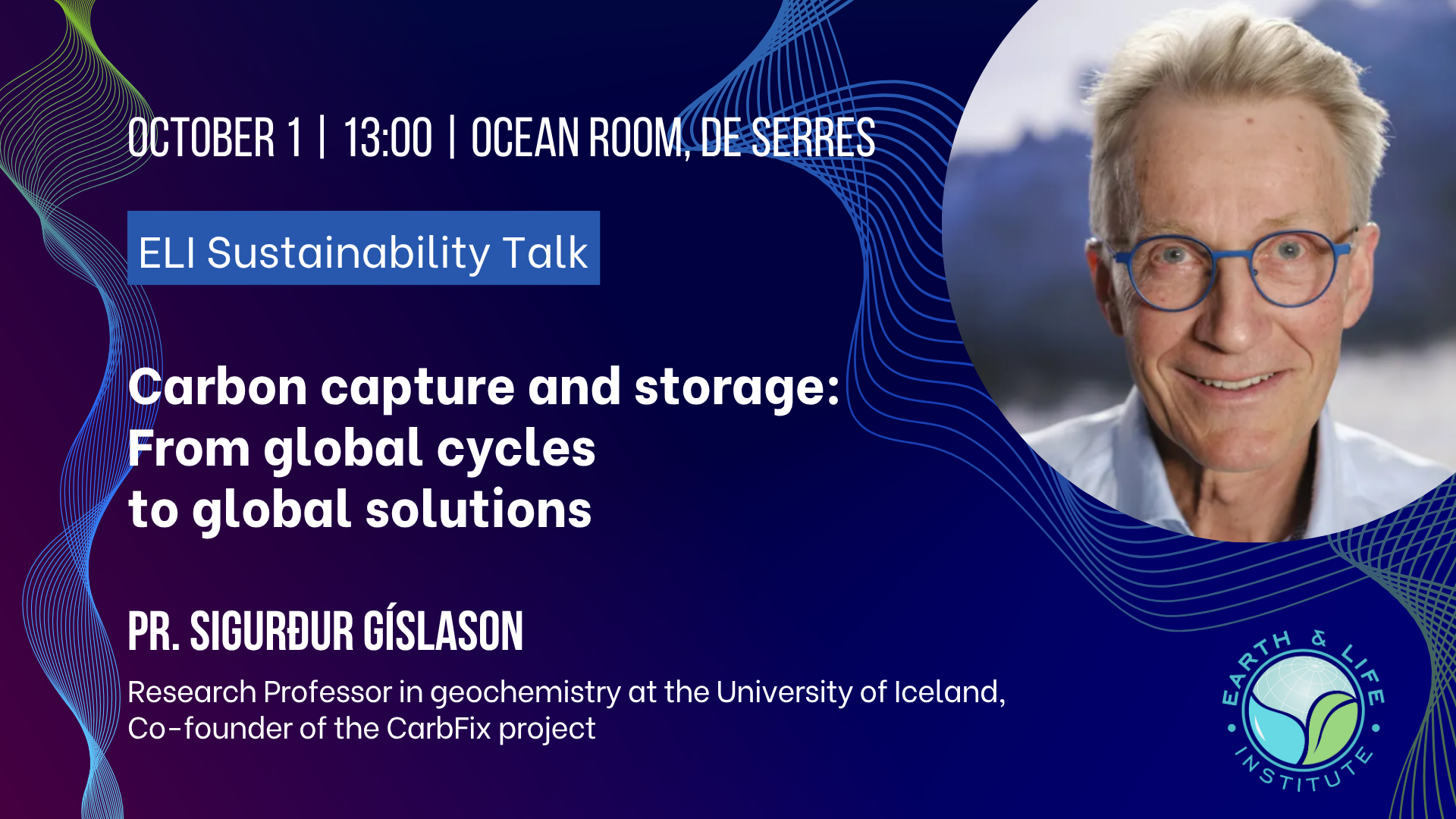
On October 1, the Earth and Life Institute is pleased to welcome Dr. Sigurður Gíslason for a new ELI-Sustainability Talk.
Due to the rapid increase in atmospheric carbon concentrations, global average temperatures have increased by more than 1.2 °C since the start of the industrial revolution.
One way to slow or even arrest this increasing global average temperature is through Carbon Capture and Storage (CCS).
Carbon dioxide can be captured either from large industrial point sources or directly from the atmosphere. Taking account of the natural carbon cycle, the most secure approach to storing captured CO2 is by reacting it with mafic or ultramafic rocks to form stable carbonate minerals, a process referred to as “mineral carbonation”.
Although mineral carbonation can occur and be accelerated at the Earth’s surface, due to the required scale and required time frames it is most effective in the subsurface.
Dr. Sigurður Reynir Gíslason is a Research Professor in geochemistry at the University of Iceland's Institute of Earth Sciences.
He was President of the European Association of Geochemistry (2019–2020), he was elected to the American Academy of Arts and Sciences (2024) and the National Academy of Sciences (USA) (2025). He's also recipient of the Patterson Award from the Geochemical Society (2018).
He has published over 200 scientific articles cited more than 20.000 times.
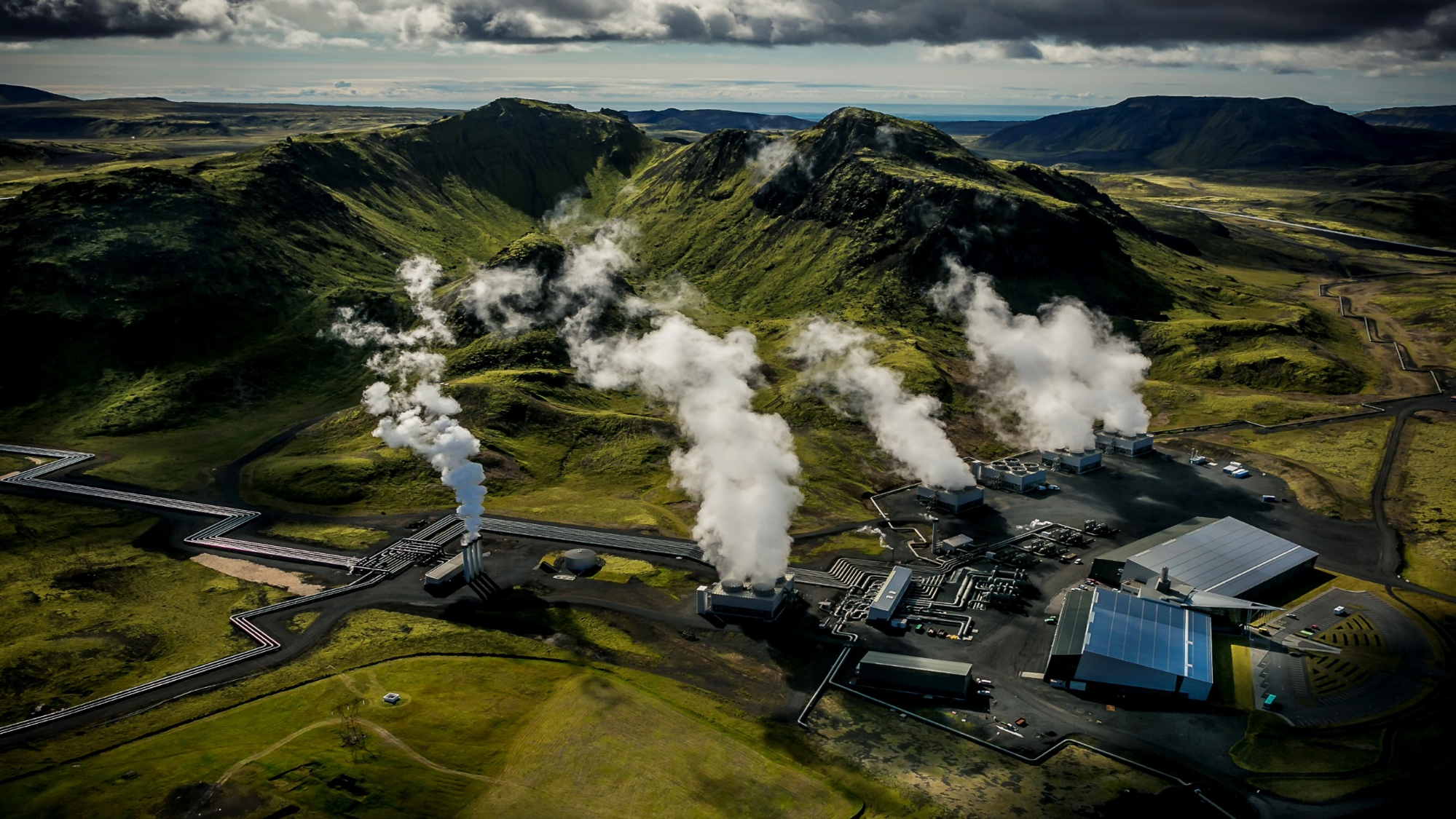
He's the co-founder and co-director of the CarbFix project (2006–2020), which developed the method to capture CO2 and store it as carbonate minerals in basalt.
When: October 1
- Lunch: 12:15 - 12:55
- Talk: 13:00 - 13:55
Where: Place Croix du Sud, Louvain-la-Neuve, Belgium
- Lunch: de Serres cafeteria
- Talk: Ocean room, de Serres building
For who: Open to everyone.
Price: Free, but mandatory registration for the lunch.
Registration: Register here by 27 September at the latest. Registration is mandatory for the lunch. Registration for the talk only is appreciated but not mandatory.
01
Oct. 2026